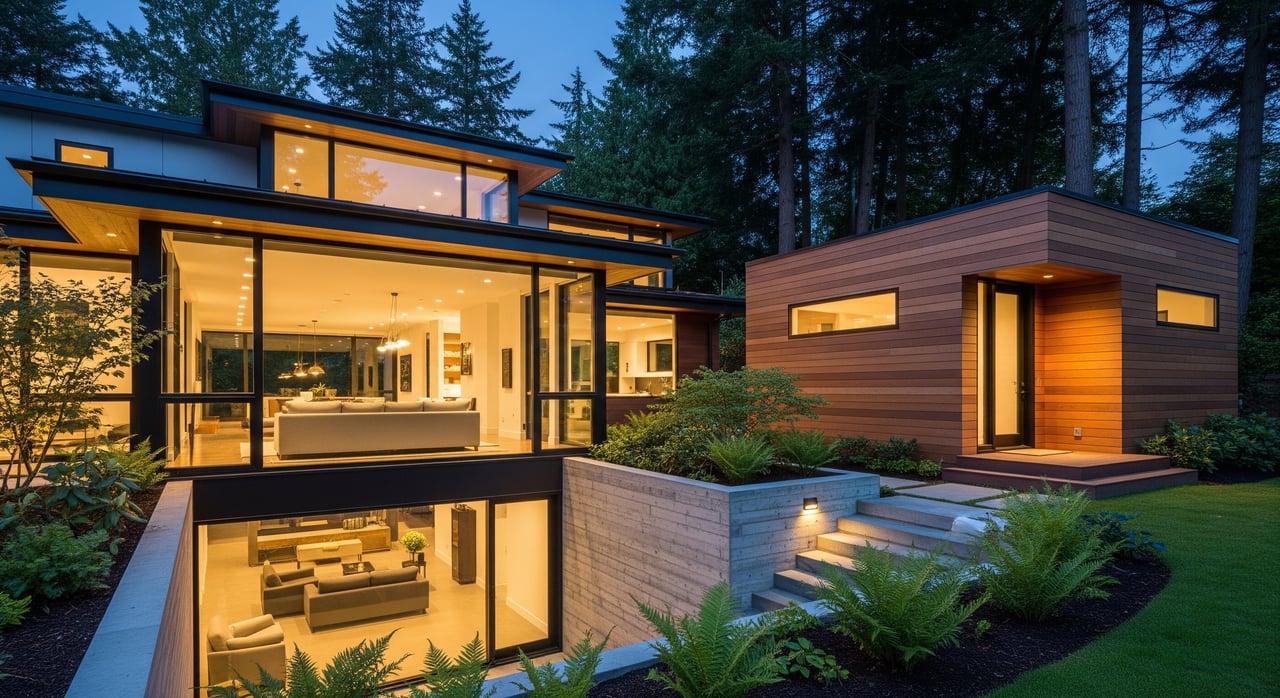
Thinking about adding an ADU or finishing your basement in Bellevue but not sure how to pay for it? You are not alone. Many Eastside homeowners want more space or future rental flexibility and need a financing plan that works with local permitting and lender rules. In this guide, you will learn the renovation loan options that fit ADUs and basements, what lenders look for, and how to prepare a lender‑ready package. Let’s dive in.
Why ADUs and basements in Bellevue
A permitted ADU or finished lower level can add useful living space and potential rental flexibility. In Bellevue’s market, a legally permitted ADU can also improve marketability and value, though the buyer pool and rent assumptions vary by neighborhood. Appraisers and lenders place more weight on spaces that are legally permitted and meet code.
Lenders and appraisers will expect clear proof that your project meets Bellevue zoning and building rules. That includes permits, plans, and a path to final inspection. Getting the permitting steps right early helps your financing and appraisal go smoothly.
Renovation loan options to consider
FHA 203(k)
The FHA 203(k) program lets you combine purchase or refinance with renovation costs in one FHA mortgage. It can work well for basement finishing, safety upgrades, and some ADU conversions treated as repairs or alterations. Qualified borrowers typically use a 3.5 percent down payment for FHA, and funds are released through draws after inspections.
There are two versions. The Limited 203(k) is intended for non‑structural work and is commonly cited at a $35,000 cap for repair funds. The Standard 203(k) supports larger or structural projects and requires a HUD consultant, extra documentation, and inspected draw schedules.
Fannie Mae HomeStyle Renovation
HomeStyle is a conventional renovation mortgage often used for larger budgets, structural work, additions, many ADUs, and finished basements. It uses conventional credit standards and typically requires mortgage insurance if your loan‑to‑value is above 80 percent. Lenders place renovation funds in escrow and release money in draws as work is completed.
A major advantage is the appraisal based on the “as‑completed” value. This can help you finance a broader scope if your plans and budget support the projected value.
Freddie Mac CHOICERenovation
CHOICERenovation is Freddie Mac’s counterpart to HomeStyle. It supports renovations and additions with funds held in escrow and released on draws. Underwriting follows conventional rules and uses an as‑completed appraisal.
Allowable scope and terms can vary by lender, so ask about any lender overlays on ADUs or structural additions when you compare quotes.
VA renovation options
If you are VA‑eligible, some lenders offer renovation packaging with a VA loan. Availability and eligible work types vary by lender. VA entitlement and funding fee rules apply, and structural additions or rental income use may need special review.
Check with VA‑approved lenders to confirm whether your ADU or basement scope qualifies under their current guidelines.
Construction‑to‑permanent loans
If you plan a new detached ADU or a substantial addition, a single‑close construction‑to‑perm loan may be the right fit. These loans fund construction through draws, then convert to a permanent mortgage at completion. You will need a builder contract, draw schedule, inspections, and stronger reserves.
Expect more paperwork and careful review of plans, permits, and contractor credentials before closing.
Cash‑out refinance, HELOCs, and portfolio loans
If you have equity, a cash‑out refinance, home equity line of credit, or home equity loan can be a simpler path. HELOCs are flexible but usually have a variable rate, and second‑mortgage underwriting still applies. Some local portfolio lenders can be more flexible for unique ADU situations.
Compare interest cost, loan‑to‑value limits, and timing. Some lenders limit draws during active construction unless proper insurance is in place.
Permits and code that affect financing
Bellevue and King County permitting shapes lender approval, appraisal value, and construction timing. Plan for the following.
- Building permits are required for ADUs and basement finishes. Apply before work begins. Unpermitted work can block appraisals, closings, and refinance.
- Review times vary by project. Allow several weeks to a few months, especially for ADUs that need zoning review.
- ADU feasibility depends on local ADU regulations. Size limits, parking, setbacks, and detached ADU allowances vary by city and HOA rules. Lenders look for permit status and code compliance.
- Life‑safety items matter. Basements used as living space need egress, minimum ceiling heights, moisture control, HVAC and ventilation, and smoke and carbon monoxide detectors. ADUs often need separate exits and fire separation. Some jurisdictions require separate utilities.
- Radon testing and mitigation are commonly recommended for finished lower levels in this region. Some lenders or insurers may request testing or mitigation.
How lenders qualify ADU and basement projects
Appraisals and as‑completed value
Renovation loans rely on an as‑completed appraisal that reflects the property’s value after improvements. The appraiser needs a credible scope, plans, budget, and schedule. For ADUs, the appraiser considers legal status, size, separate entry, kitchen and bath, and comparable sales in Bellevue.
If ADUs are less common in your micro‑area, appraisers may be more conservative about value lift. Getting plans and permits in hand can help support the appraised value.
Using projected rental income
Some lenders allow projected ADU rental income to help you qualify. The strongest documentation is a signed lease or 12 months of rental history. If that is not available, certain conventional programs may use market rent from the appraisal and count a conservative share, often about 75 percent, toward qualifying. Rules vary by investor and loan product.
Confirm with your lender if projected rent for a proposed ADU is eligible under their current guidelines.
Draws, holdbacks, and contingencies
Renovation funds are held in escrow and released through draws tied to milestones and inspections. Lenders commonly require a contingency reserve, often 5 to 15 percent of the renovation budget. A final holdback, often 5 to 10 percent, is released after final inspection and occupancy approval.
Plan your schedule with inspections and lender release timelines in mind to avoid delays.
Title, insurance, and occupancy
Lenders will review title for easements, deed restrictions, and any HOA rules that affect ADU use. During construction, servicers typically require builder’s risk coverage or an endorsement on your homeowner’s policy, plus proof of contractor liability insurance. Some programs require owner occupancy of the primary residence, and local owner‑occupancy rules for ADU permits can also apply.
Program differences that matter
- Standard FHA 203(k) requires a HUD consultant and has more detailed disbursement rules. This helps with structural work but adds time and cost.
- Conventional renovation loans are often faster for larger projects if you meet credit and reserve standards.
- Construction‑to‑perm is often best for new detached ADUs since many renovation loans are designed to improve an existing structure.
Lender‑ready checklist
Quick decision flow
- Small, non‑structural basement finish or cosmetic ADU conversion under about $35,000 repair funds: consider FHA 203(k) Limited or a HELOC/cash option.
- Larger structural work, additions, or many ADUs: consider HomeStyle, CHOICERenovation, or construction‑to‑perm.
- VA‑eligible borrowers: ask VA‑approved lenders about renovation options.
- New detached ADU: often requires a construction‑to‑perm loan.
Documents to gather
- Property: mortgage statement, any surveys or site plans, title report or deed, address and parcel number.
- Project: clear scope of work, line‑item contractor bids, architect or engineer plans if needed, project schedule, permit status.
- Contractor: license number, liability and workers’ comp certificates, references, sample contract with milestones and lien waiver terms.
- Financials: pay stubs, tax returns, bank statements, reserves, and any rent documentation such as a draft lease or market rent comps.
- Photos: current interior and site photos showing access and conditions.
Scope planning tips
- Provide before and after photos and a concise, plain‑language scope tied to a line‑item budget.
- Separate structural, major systems, egress and life‑safety, and finish items. Lenders prioritize safety and code compliance.
- Secure permits or at least submit for review before appraisal if possible. This reduces risk and can speed funding.
- Include a contingency of 10 to 20 percent. Many lenders require a contingency line in the renovation escrow.
- If you plan to use rental income, gather local rent comps for a similar unit and prepare a draft lease.
Contractor vetting
- Verify Washington State registration and insurance through Labor & Industries.
- Collect references and examples of ADU or basement projects in King County.
- Confirm your contractor will work with renovation lenders, draw inspections, and lien waivers.
- Use a written contract with clear milestones and a payment schedule tied to inspections.
Common pitfalls to avoid
- Starting any work before permits are issued.
- Counting on optimistic rent without documentation.
- Hiring unlicensed contractors.
- Underestimating inspection and draw timelines that can extend carrying costs.
Local steps to move forward
- Build your lender‑ready package with photos, scope, bids, and permit status.
- Speak with two or three lenders who regularly close renovation loans. Include an FHA 203(k) lender, a conventional renovation lender, and a local bank that offers construction‑to‑perm.
- Ask for a preliminary scenario with maximum renovation funds, estimated as‑completed LTV, rate range, and down payment or reserve needs.
- If structural changes are planned, engage an architect or designer early for schematic plans.
- Confirm ADU feasibility with Bellevue Planning and review any HOA rules before finalizing bids.
Final thoughts
Financing an ADU or basement in Bellevue works best when you pair the right loan with a clear plan, a permitted scope, and a licensed contractor. Lenders rely on as‑completed value, conservative rent assumptions, and documented code compliance. With the right preparation, you can move from concept to completion with fewer surprises.
Ready to map out your ADU or lower‑level project and understand the impact on resale and financing? Schedule Your Personalized Home Consultation with Unknown Company.
FAQs
Bellevue ADU financing: can projected rent count?
- Some lenders allow market rent from the appraisal and may count about 75 percent of it for qualifying, but rules vary by product and lender.
What permits do Bellevue basement finishes need?
- Building permits are required, with inspections for structural, electrical, mechanical, and plumbing work, plus egress and life‑safety compliance.
Which loan fits a new detached ADU in Bellevue?
- A construction‑to‑permanent loan is often used because many renovation products focus on improving an existing structure.
How do draws and holdbacks work on renovation loans?
- Funds are held in escrow and released after inspections, with a contingency reserve and a final holdback until the project passes final inspection.
Will an ADU always raise my home’s value?
- A permitted ADU can improve value and marketability, but uplift depends on neighborhood comps and how common ADUs are in that area.
Do I need a licensed contractor for lender approval?
- Most lenders require licensed, bonded, and insured contractors and will review contracts, credentials, and insurance before approving draws.